Building Inner Strength Through a Self Confidence Self Esteem Journal
Many adults quietly struggle with a persistent inner critic that undermines their daily decisions, relationships, and career choices. Low self-worth does not always announce itself loudly. It often shows up as hesitation before speaking in meetings, avoiding opportunities that feel “too big,” or constantly comparing oneself to others. A Self Confidence Self Esteem Journal offers a structured, private, and practical tool to gently shift these patterns. Rather than relying on vague affirmations alone, this approach combines reflection, mindfulness, and consistent small actions to rebuild self-trust from the inside out.
Understanding the Weight of Low Self-Esteem in Everyday Life
Low self-esteem is not simply about feeling sad or insecure. It affects how people interpret feedback, set boundaries, and pursue goals. Someone might assume a friend’s short text means anger instead of busyness. Another person may overprepare for every presentation yet still feel like a fraud. These mental habits drain energy and limit growth. The challenge is that self-doubt becomes automatic, running in the background like unattended software.
Without a tangible tool to externalize these thoughts, they loop endlessly. Talking to friends helps, but not everyone feels comfortable sharing deep insecurities. Professional therapy is valuable, yet many seek complementary daily practices that fit into a quieter, more personal routine. A thoughtfully designed journal fills this gap by turning abstract feelings into concrete prompts that guide self-discovery at a personal pace.
What a Self Confidence Self Esteem Journal Actually Does
A Self Confidence Self Esteem Journal is not a diary with blank pages. It provides intentional direction through carefully crafted sections that target specific areas of self-perception. The goal is not to force positivity but to encourage honest observation. Over time, documenting thoughts helps people identify recurring patterns, celebrate small wins, and challenge distorted beliefs.
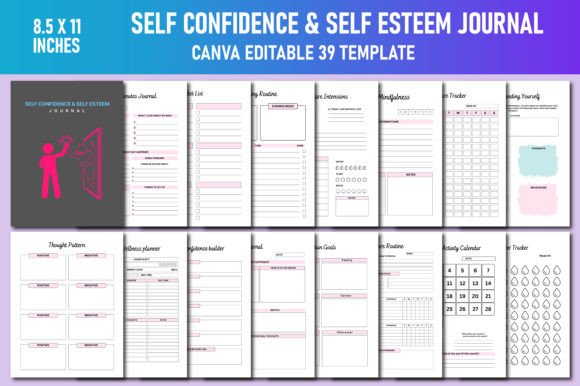
For example, a section like “Thought Pattern” helps recognize when the mind defaults to catastrophic thinking. Another section titled “5 things I like about myself” may feel difficult at first, which itself reveals how unfamiliar self-appreciation can be. The journal becomes a mirror that reflects both struggles and strengths without judgment. By combining elements of mindfulness, goal-setting, and emotional tracking, it addresses self-worth from multiple angles rather than a single narrow approach.
Identifying the Core Needs Behind Journaling for Self-Worth
People who turn to this type of resource usually share common underlying needs. They want to feel more confident in their own voice, whether at work or in personal relationships. They need a safe space to explore feelings they may have suppressed for years. Many also seek consistency—a daily ritual that anchors them when external validation is inconsistent or absent.
Someone navigating a major life transition, such as a career change or the end of a relationship, often finds their self-esteem particularly fragile. In these moments, a Self Confidence Self Esteem Journal serves as a stabilizing companion. It does not replace human connection but offers reliable support during moments of solitude. The need extends beyond feeling better temporarily; most users genuinely want to understand themselves more deeply and build resilience that lasts.
Practical Sections That Make a Real Difference
The most effective journals break the journey into manageable themes. Rather than overwhelming the user with abstract advice, they provide clear, actionable prompts. A Self Confidence Self Esteem Journal might include areas like a “Self-Care Tracker” that encourages noticing how daily habits affect mood. Another powerful section is “My Personal Strengths,” which shifts focus from perceived flaws to existing capabilities.
Consider the “Compliment Jar” concept. Writing down compliments received or positive feedback may feel awkward initially, but reviewing these entries weeks later provides concrete evidence against the inner critic’s narrative. The “Negative Thoughts” and “Saboteur Thoughts” worksheets help externalize mental distortions so they can be examined rather than absorbed. When a thought like “I always fail” appears on paper, its absolute language becomes easier to challenge with real counterexamples.
Habit trackers for sleep, water intake, and mood create awareness of how physical well-being influences emotional resilience. The “Evening Routine” and “Morning Routine” sections support structure, which is especially helpful for those whose self-doubt disrupts daily consistency. Each component connects self-esteem to tangible behaviors, making growth feel measurable and real.
How Different People Use a Self Confidence Self Esteem Journal
Adults approach this practice from varied backgrounds and with different intentions. A young professional might focus heavily on the “Achieve your goals” and “Motivation Worksheet” sections to combat imposter syndrome. A stay-at-home parent may prioritize “Self-Love Journey” and “Connecting With My Soul” prompts to reclaim identity beyond caregiving roles. Someone recovering from a toxic relationship could find the “Understanding Yourself” and “Self-Awareness Worksheet” especially healing.
Each person uses the journal differently because self-esteem challenges are personal. There is no correct order or required speed. The flexibility of a well-designed interior means the same resource can support a college student facing academic pressure and a retiree redefining purpose. The common thread is the act of showing up consistently to witness one’s own mind with compassion rather than criticism.
Building a Sustainable Habit Around Self-Reflection
One of the biggest obstacles to self-improvement is consistency. People often start enthusiastically but abandon the practice when initial motivation fades. A Self Confidence Self Esteem Journal with varied, engaging sections helps sustain interest. The “5 Minutes Journal” concept is particularly effective because it lowers the barrier to entry. Even on exhausting days, a brief check-in feels manageable.
Pairing journaling with an existing routine increases follow-through. Some prefer the morning to set intentions; others use the “Evening Routine” to reflect and decompress. The “Self-Care Activity Calendar” introduces novelty, suggesting small acts of kindness toward oneself throughout the month. Tracking progress through mood charts and habit logs also provides visual reinforcement that change is happening, even when it feels slow.
The Role of Mindfulness in Strengthening Self-Esteem
True confidence does not come from ignoring flaws or pretending everything is perfect. It grows from mindful awareness—observing thoughts without immediately identifying with them. Sections like “Daily Mindfulness” and “My Mind” encourage this detached yet curious stance. When a person writes down a negative thought and then labels it as just a thought, its emotional grip often loosens.
This practice builds what psychologists call metacognition, the ability to think about thinking. Instead of being swept away by anxiety, someone can pause and note, “I am having the thought that I am not good enough.” That small shift creates space for a more balanced perspective. Over weeks and months, this mental habit rewires automatic responses, making self-compassion the default rather than self-criticism.
Setting Goals Without Tying Self-Worth to Outcomes
Ambition and self-esteem can exist in a healthy relationship, but many people tie their value entirely to achievement. The “My Main Goals” and “Bucket List” sections in a Self Confidence Self Esteem Journal encourage dreaming while the “Positive reinforcements” and “Self Love Worksheet” remind users that their worth is inherent, not earned.
This dual approach prevents burnout. Someone can pursue a promotion while also practicing the “My 10 Affirmations” that reinforce unconditional self-acceptance. Writing down “All Time Favorites”—simple things that bring joy—grounds the person in present contentment rather than future striving. Balance is the key. Goals provide direction; self-love provides the foundation to handle setbacks without collapse.
Overcoming Common Resistance to Journaling
Some adults resist journaling because they associate it with teenage diaries or believe they are not good writers. Others fear that putting painful thoughts on paper will amplify them. These concerns are valid and common. A Self Confidence Self Esteem Journal addresses them through structure. Prompts remove the pressure of figuring out what to write. Guided sections feel less overwhelming than blank lines.
For those worried about amplifying negativity, the balance between exploration and uplifting prompts matters. A section like “Anxiety Management” acknowledges struggle while moving toward coping strategies. The “Self-Care Tracker” and “Skin Care Routine” entries connect self-worth to physical nurturing, reminding the user that caring for the body is also an act of self-respect. This holistic design helps journaling feel like a supportive conversation rather than a rehearsal of pain.
Using Printable and Editable Formats for Flexibility
Different lifestyles require different formats. Some people prefer writing by hand, finding the tactile experience more grounding. High-quality print-ready files allow them to create a physical journal they can hold, personalize, and keep private. Others thrive with digital customization, especially those who enjoy designing their own layouts or need to adjust prompts to suit specific needs.
Editable templates offer a significant advantage for therapists, coaches, and wellness practitioners who want to tailor the content for clients. The ability to modify sections means a Self Confidence Self Esteem Journal can evolve with changing goals. Someone might start with basic mindfulness prompts and later add more advanced self-inquiry worksheets. The interior becomes a living document rather than a static product, which increases long-term engagement and relevance.
Integrating Self-Esteem Work Into a Broader Wellness Practice
A journal is most powerful when part of a larger commitment to well-being. The “Sleep Tracker” and “Water Tracker” connect self-esteem to physical health, reinforcing the idea that caring for the body is an expression of self-worth. The “Mood Tracker” reveals patterns over time, potentially showing how certain foods, social interactions, or activities affect emotional states.
Someone might notice through the “Evening Routine” that scrolling social media before bed worsens morning anxiety. That insight, captured in the journal, becomes actionable. The “Anxiety Management” worksheet provides tools to handle the resulting discomfort. These interconnections make the journal a central hub for self-care rather than an isolated exercise. Self-confidence grows not from one dramatic breakthrough but from hundreds of small, aligned choices made daily.
What Makes This Approach Effective Long-Term
Lasting change requires more than reading inspirational quotes. The combination of self-awareness, behavioral tracking, cognitive reframing, and compassionate reflection creates multiple pathways for growth. If one method does not resonate on a given day, another might. A person struggling with motivation might skip “My Main Goals” and instead complete the “Compliment Jar” or “Self-Care Intensions.”
This flexibility prevents the all-or-nothing thinking that often sabotages self-improvement efforts. Missing a day does not mean failure. The journal is a tool, not a test. Over time, the accumulated entries become a personal archive of growth, a testament to the quiet work of healing. Rereading old pages can be profoundly encouraging, showing undeniable evidence of progress that the forgetful mind might otherwise overlook.
A Practical Step Toward a Stronger Inner Foundation
Choosing to begin a Self Confidence Self Esteem Journal is a declaration that one’s inner world deserves attention. It signals a willingness to meet oneself with honesty and kindness. Whether used in the early morning quiet, during a lunch break, or before sleep, each session strengthens the relationship between the person and their own mind. The pages hold space for confusion, celebration, grief, and hope alike.
For anyone tired of feeling small, invisible, or perpetually less-than, this practice offers a path forward that does not require perfection. It asks only for presence. The combination of guided reflection, editable flexibility, and holistic design makes it accessible to a wide range of adults with diverse needs. Self-esteem is not a fixed trait but a skill that can be nurtured, one thoughtful entry at a time.