Getting the Most Out of Easy Sudoku for Kids 198 in Your Publishing and Teaching Workflow
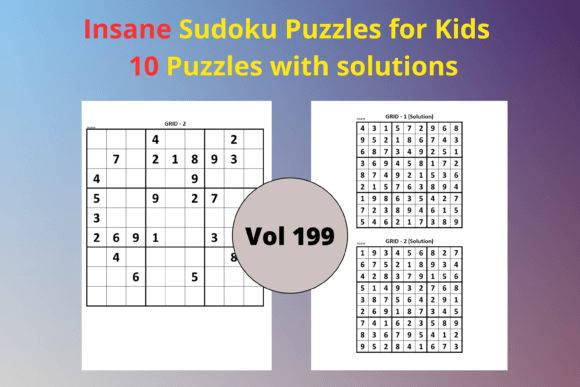
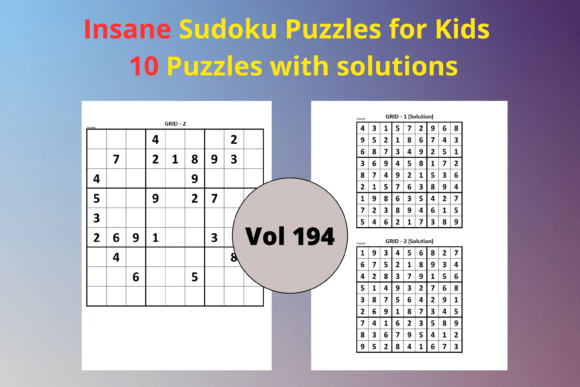
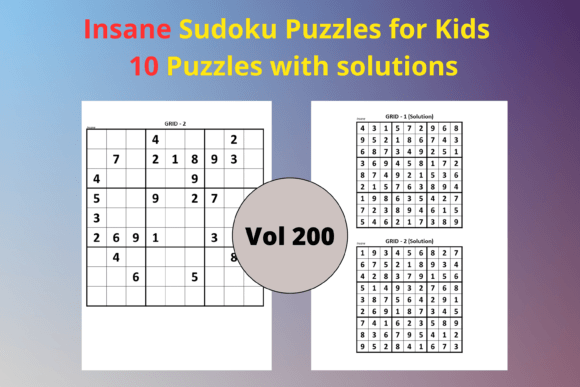
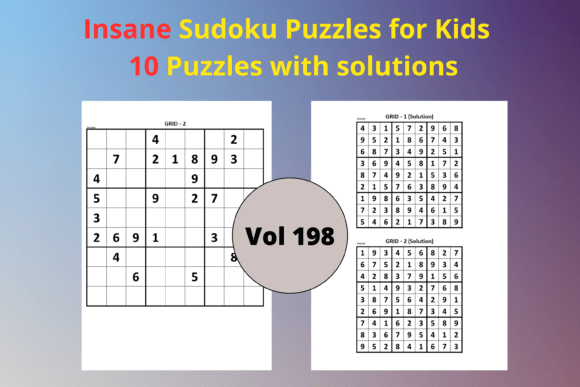
Creating or sourcing ready-to-use activity content for children often involves a search for materials that balance simplicity, quality, and immediate usability. Easy Sudoku for Kids 198 is one such resource that lands squarely at the intersection of low-prep educational entertainment and practical publishing. It is a collection of ten 9x9 Sudoku puzzles paired with ten corresponding solution pages, designed specifically for young beginners. The pack arrives as a pre-formatted PDF and an editable PPTX file, sized at 8.5 x 11 inches, meeting the technical specifications required for Amazon KDP interiors, classroom handouts, or printable activity bundles.
Understanding where this specific asset fits into a broader creative or business process helps you move from simply having a file on your hard drive to actually integrating it into a finished product, lesson plan, or revenue-generating item. Whether you are building a low-content book catalog, assembling a rainy-day activity kit, or creating supplemental materials for early math learners, the way you handle the resource before, during, and after insertion into your project determines how professional the final result looks and how well it serves the end user — the child working through the puzzle.
What the Easy Sudoku for Kids 198 Pack Actually Contains
Before diving into integration, it is worth clarifying the anatomy of this particular resource. The pack provides ten unique Sudoku grids, each structured as a standard 9x9 board. The difficulty is explicitly easy, which means the puzzles start with a generous number of pre-filled digits, offering clear pathways for logical deduction rather than guesswork. The solutions are presented as separate, fully completed grids — not as tiny answer keys squeezed into a corner, but as full-page references. This separation is intentional and useful when you need to decide whether to include solutions at the back of a book, on a facing page, or withhold them entirely for teacher-led checking.
The file format duality is critical. The PDF is print-ready, locked in layout, and suitable for direct upload to KDP or any print-on-demand platform without additional tweaking — provided your cover and overall book structure align. The PPTX version allows for custom edits. You can adjust puzzle placement, change fonts, add branding, insert instructions, or even restructure the order of puzzles and solutions. This flexibility makes the pack more than a single-use item; it becomes a base component you can reshape across multiple projects.
Where Easy Sudoku for Kids 198 Fits in a Content Creation Timeline
For KDP publishers, the typical low-content book workflow includes ideation, interior sourcing or creation, formatting, cover design, upload, and eventual marketing. Easy Sudoku for Kids 198 enters the process at the interior assembly stage. Because the pack is already sized correctly and contains both puzzles and solutions, it eliminates the separate tasks of grid generation, difficulty calibration, and solution verification — three steps that often consume hours when done manually or with generic puzzle generators that do not guarantee child-appropriate difficulty.
For educators and parents, the timeline shifts. The resource fits into lesson planning or activity preparation. Instead of designing a logic-based warm-up or early-finisher task from scratch, you open the PDF, print the needed pages, and the activity is ready. The editable PPTX adds another layer for teachers who want to adapt puzzles for specific learners, perhaps by pre-filling additional numbers to further reduce difficulty or by enlarging the grid for students with visual processing needs.
In both scenarios, the asset operates as a time compressor. It collapses the gap between deciding to include Sudoku in a product or lesson and having a polished, age-appropriate version ready to go.
Preparing the Files for Your Specific Output Channel
Preparation is where many otherwise solid interiors fall apart. With this particular pack, the PDF is essentially plug-and-play for KDP, but you should still verify a few details before upload. Open the file and confirm that margins are consistent with Amazon's trim requirements. Since the pages are 8.5 x 11 inches, you need to ensure the content sits well within the safe zone — no critical puzzle elements drifting into the gutter or bleed area. The PPTX gives you the power to fix this if adjustments are needed.
If you plan to combine these ten puzzles with other Sudoku sets or activity types — mazes, word searches, coloring pages — use the PPTX version as your master template. Copy slides into a larger PowerPoint file, maintaining consistent spacing, numbering, and stylistic choices across all components. This prevents the jarring experience of flipping through a book where puzzle styles shift noticeably between sections, a common issue in mixed activity books assembled from disparate sources.
For print-at-home users and teachers, preparation often means deciding on paper quality and print settings. These puzzles print cleanly on standard copy paper, but if you want to laminate pages for repeated use with dry-erase markers, choose a slightly thicker cardstock before lamination. The generous solution grids also make excellent reference posters if printed large and displayed in a classroom math corner.
Practical Ways to Use the Puzzles and Solutions Together
The ten-puzzle, ten-solution structure invites methodical organization. In a KDP interior, the standard arrangement places all puzzle pages first, followed by all solution pages. This prevents accidental peeking when children flip through the book. You can reinforce this by adding a blank page or a short note between the puzzle section and the solution section, guiding users to try the puzzles before checking answers. The PPTX file makes inserting these separator pages straightforward.
Another approach, especially useful for spiral-bound activity books or printable packets, is to present each puzzle immediately followed by its solution on the back of the same page. This works well for single-use consumable books where a child solves a puzzle, then turns the page to check their work. The editable format lets you rearrange the slide order to achieve this back-to-back flow without manual collating during printing.
For digital use — sharing with students via a tablet or learning management system — consider extracting just the puzzle pages from the PPTX to distribute as a digital workbook, then keeping the solutions in a separate teacher-only file. This maintains the integrity of the activity while giving you quick access to answer keys during instruction or grading.
Organizing the Pack Alongside Other Activity Resources
If you maintain a library of activity templates, puzzles, and printable resources, naming conventions and folder structures become unexpectedly important over time. A file named "Easy Sudoku for Kids 198" is descriptive, but consider appending metadata that helps you retrieve it quickly: the puzzle count, difficulty level, grid size, and whether solutions are included. Something like Easy-Sudoku-Kids-10puzzles-9x9-with-solutions.pdf sits neatly in a folder alongside other Sudoku variants and prevents confusion with harder puzzle packs or those formatted for different age groups.
In a content creator's asset bank, this pack functions as a module. You might build a project folder for a planned KDP book titled something like "Sudoku for Beginners: 100 Easy Puzzles" and drop this pack in as one of ten similar packs that together form the full manuscript. Treating each pack as a discrete, quality-checked module reduces the mental overhead of managing large, single-file puzzle collections where a single formatting error can cascade.
Quality Control and Consistency Across Multiple Uses
Even though the puzzles come pre-designed, a quick review prevents the rare but real issue of a duplicate puzzle or a misprinted solution grid. Run through one or two puzzles yourself or have a child tester attempt a board. This not only verifies the puzzle logic but also confirms the difficulty label holds up. An "easy" Sudoku that requires advanced techniques frustrates young solvers and leads to negative reviews if the product goes to market.
When you use the PPTX to make edits, keep font choices simple and highly legible. The numbers inside Sudoku grids need to be clear at any size, including when printed at smaller-than-standard dimensions if the book is scaled. Stick with sans-serif fonts and avoid decorative typefaces for the grid numbers. If you add instructions or a title page, maintain the same typeface throughout for a cohesive look.
For those publishing on KDP, run a physical proof copy before making the book publicly available. Check that the puzzles print centered, that the solution pages are not faint or misaligned, and that the overall book feels right in hand. A digital preview on screen rarely catches subtle print alignment issues that only become visible on paper.
Adapting the Resource for Different Audiences and Use Cases
While the pack is explicitly designed for kids, the easy difficulty and clean formatting open up other applications. Senior activity coordinators, occupational therapists, and cognitive rehabilitation specialists often use large-print, gentle Sudoku puzzles in their work. The 9x9 grid with clear, spacious cell sizing translates well to these settings with minimal modification. If you serve these markets, the PPTX allows you to swap the title text or remove kid-specific branding while keeping the puzzle content intact.
Homeschool parents can embed these puzzles into a broader logic and reasoning curriculum. Instead of presenting Sudoku as isolated recreation, you can sequence the puzzles over two weeks, gradually discussing strategies as the child progresses from the first puzzle to the tenth. The pack's manageable size makes it a finite, achievable challenge rather than an overwhelming book of hundreds of puzzles. Completion builds genuine confidence.
Long-Term Value and Reusability of the Editable PPTX
The editable PPTX file extends the lifespan of this purchase well beyond a single project. If you create themed activity books — holiday Sudoku, seasonal puzzle collections, or character-branded learning materials — you can revisit the same PPTX, apply new backgrounds, insert thematic clip art around the grids, and produce a fresh product without repurchasing core puzzle content. The underlying puzzle structures remain consistent; the visual wrapper changes to meet new market demands.
This modular reusability is where Easy Sudoku for Kids 198 functions less like a one-off download and more like a reusable template. Treat the PPTX as your master file, and always duplicate it before making project-specific edits. That way, the original clean version stays intact for future work, and you avoid the slow drift where accumulated small changes make the file harder to repurpose over time.
Integrating Sudoku Into a Child's Daily Routine Without Friction
For the end user — the child — the experience of receiving a well-designed Sudoku page matters. The puzzles in this pack are clean and uncluttered, which supports focus. When you print or publish them, resist the temptation to overcrowd pages with excessive instructions, motivational quotes, or decorative borders that distract from the grid itself. A simple, bold title and maybe a small area for the child to write their name and the date keep the page functional and useable as a record of progress.
Parents who introduce these puzzles as part of a calm-down corner, a morning brain warm-up, or a screen-free quiet time activity find that the predictable structure of easy Sudoku provides a comforting rhythm. The pack's ten-puzzle length is ideal for trialing this routine without committing to a thick workbook. If the child engages well, you can confidently invest in larger puzzle collections knowing the format and difficulty level suit them.
Whether you are publishing, teaching, or parenting, the resource works because it removes friction. The puzzles are built, the solutions verified, the formatting done. Your effort shifts from creation to thoughtful implementation — organizing pages, setting print parameters, introducing the activity, and celebrating when a young solver grins at a completed grid.