Halloween Sudoku: Puzzles with a Spooky Twist
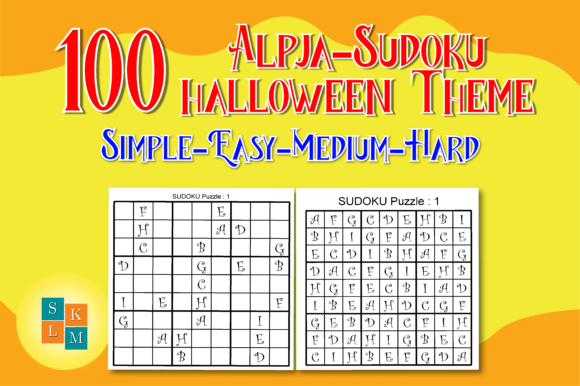
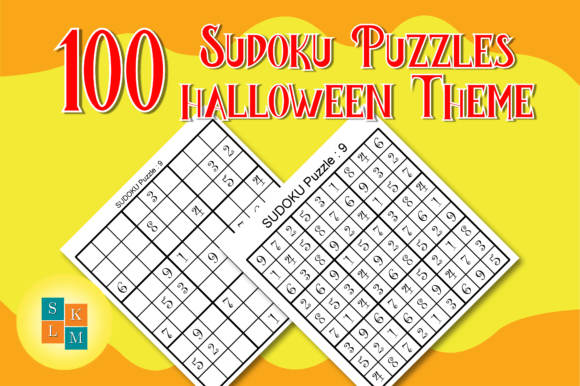
Imagine a classic Sudoku grid, but instead of sterile black digits on a white background, every number is drawn with jagged, creepy lettering reminiscent of haunted house signs and vintage horror movie posters. That is exactly what Halloween Sudoku delivers — a logic puzzle collection where the numbers themselves wear costumes. This particular set includes 100 unique puzzles and their solutions, all rendered in a delightfully spooky font, and packaged as high-resolution PNG files at 300 DPI. The difficulty span is carefully balanced: 25 simple, 25 easy, 25 medium, and 25 hard puzzles. Whether you want to build an activity book, design a classroom handout, or simply enjoy some seasonal brain training, the combination of number logic and festive design changes the experience completely.
Who Finds Value in a Halloween-Themed Sudoku Collection?
Different people look at the same set of puzzles and see entirely different possibilities. A KDP publisher hoping to launch a niche seasonal activity book will evaluate the product for its commercial viability, print resolution, and layout flexibility. An educator or homeschooling parent might scan the difficulty distribution and visual appeal, asking whether it can hold a child's attention while reinforcing logical reasoning. A casual puzzle lover may simply want some seasonal fun on a tablet during October evenings. A party planner or small business owner running a community event might see an affordable way to print a stack of unique handouts that fit a Halloween theme without the usual generic clip art. All of these perspectives matter, and the same product can serve each one well when you know what to look for.
The Creator’s Perspective: Commercial Use and Customization
For self-publishers, activity book creators, and designers selling on platforms like Amazon KDP, Halloween Sudoku solves a specific problem: finding theme-consistent puzzle content that does not look like every other book on the market. The 300 DPI PNG format is a critical detail — it means you can drop these puzzles directly into a 300 DPI interior without losing clarity, and the transparent background typically associated with PNG files makes layering over patterned backgrounds or colored pages far simpler. You are not locked into a standard black-on-white grid; you can build a truly immersive interior by adding cobweb corners, pumpkin borders, or candy corn accents behind the puzzle.
One practical example: if you are assembling a Halloween Activity Book for Adults and Seniors, you might take the 25 easy and 25 medium puzzles from this collection, resize them to occupy the upper two-thirds of a page, and add a large-print number reference below. Because the font is already spooky, your branding feels cohesive from page one. Another creator might grab the hard puzzles and pair them with Gothic decorative elements to target an audience that loves complex logic wrapped in a darker aesthetic. The key benefit here is flexibility without the headache of reformatting low-resolution clip art puzzles that degrade when scaled.
The Educator’s Lens: Engagement, Differentiation, and Atmosphere
Teachers and activity coordinators often face the challenge of making practice exercises feel fresh. A standard Sudoku sheet works for logic development, but during October, a Halloween Sudoku immediately captures attention — especially for students who might otherwise groan at a math-adjacent task. The spooky font adds a layer of playful mystery. A middle school math teacher could print the simple and easy puzzles as warm-up activities the week before Halloween, then offer medium ones as an optional challenge. Since the set includes solutions, peer checking or self-assessment becomes effortless.
For educators running an after-school club or a library event, the ability to print one-off puzzles from the PNG files means you can customize handouts for a one-time “Halloween Puzzle Break” without buying a whole workbook. The varying difficulty also supports differentiation: a struggling student gets a confidence-building easy puzzle, while a fast finisher receives a hard one that actually requires sustained focus. This addresses the priority of learning value without sacrificing seasonal fun. If you laminate the printed puzzles, they become reusable station activities that literally look like they belong in a haunted classroom.
The Hobbyist and Casual Solver: Atmosphere Over Spreadsheets
Not everyone needs commercial rights or classroom packs. Many adults simply enjoy solving Sudoku as a relaxing ritual, and during autumn, they gravitate toward anything that amplifies the cozy-spooky vibe. Typing numbers into a standard Sudoku app feels functional, but sitting down with a printed Halloween Sudoku page — where a crooked “7” resembles a twisted branch — brings a tactile, seasonal pleasure that digital puzzles rarely match. You can brew a pumpkin spice tea, put on an ambient soundtrack, and work through a few easy puzzles to unwind, then tackle a hard one on the weekend when your brain wants a real workout.
For this audience, presentation and ease of use sit at the top of the priority list. The product delivers on both: you open the PNG file, print it on your preferred paper (even a light orange or cream cardstock looks stunning), and you are ready. There is no need to install fonts, wrestle with puzzle generation software, or solve a puzzle before you can share it. The spooky numbers are already baked in, and the graduated difficulty ensures you can pick your mood rather than hunting for a matching level elsewhere.
Practical Examples Across Different Goals
It is helpful to see how the same collection maps onto real projects. Below are a few scenarios that highlight the breadth of use without requiring you to be a professional designer.
- The Etsy Shop Owner: You sell printable party games. You drop a few medium Halloween Sudoku puzzles into a digital download bundle alongside word searches and trivia. The 300 DPI quality ensures customers receive crisp prints, and the spooky font instantly communicates the theme, reducing the need for additional decoration.
- The Community Center Volunteer: You are organizing a senior social afternoon with a Halloween twist. You print the simple and easy puzzles in large scale (two per page) so visibility is excellent. The unique font sparks conversation: “Look at those crooked numbers!” It adds levity without being childish.
- The Bullet Journal Enthusiast: You incorporate seasonal challenges into your October spreads. You print one hard puzzle on sticker paper, trim it to size, and paste it into your weekly layout as a mindfulness break. The spooky typography enhances your aesthetic theme, and solving becomes part of your creative practice.
- The Parent Preparing a Class Party: You need an activity that is quiet, engaging, and mess-free. You print 30 easy puzzles (different ones, thanks to the generous count) and tuck them into goodie bags along with a small pencil. Because the solutions are included, you can print an answer key for the teacher without any extra work.
Priorities That Shape Your Choice
When deciding whether a puzzle collection like this fits your needs, the evaluation often comes down to a handful of practical factors. Understanding them helps you skip trial and error.
Quality and Print Readiness: The 300 DPI PNG format is non-negotiable for anyone planning to print or include puzzles in a published interior. Lower resolutions lead to fuzzy edges that cheapen the final product. Because these puzzles already hit the standard print resolution, you avoid the frustration of upscaling and softening.
Time and Reliability: Generating 25 puzzles per difficulty level manually takes hours, especially if you need to verify solvability and ensure only one solution exists. This set is already tested and formatted. For a creator under a tight season launch deadline, that pre-built reliability means you can go from download to interior layout in an afternoon instead of weeks.
Creative Flexibility: Some puzzle sets come as locked PDFs with heavy watermarks. Transparent-background PNGs allow you to place the grid over a subtle bat silhouette or a moonlit graveyard illustration. This is vital for KDP authors who want their book to feel immersive, not just a template that twenty other sellers use.
Seasonal Relevance and Long-Term Use: Halloween content is inherently seasonal, but it can have evergreen appeal if you repurpose it cleverly. A subset of the puzzles could appear in a “Creepy Puzzles for Rainy Days” compilation. Or, year after year, you refresh the same classroom activity because it never gets old for new students. The investment pays off repeatedly if you plan to use the puzzles annually.
Exploring the Difficulty Spread
That 25-25-25-25 split across simple, easy, medium, and hard is more than a numbers game. It reflects a thoughtful design for real-world use. A complete beginner might freeze on a hard puzzle and give up; likewise, an experienced solver might feel insulted by an entire book of simple grids. This collection acknowledges both mindsets, and that matters for anyone serving a broad audience.
If you are creating a mixed-ability activity book, you can intersperse levels to keep readers engaged longer. You might start a chapter with a confidence-boosting easy puzzle, then gradually introduce medium and hard. The contrast keeps the book from feeling repetitive. For classroom use, a teacher can assign levels based on informal assessment — offering a struggling student the simple version while a logic-savvy child tackles medium. The hard puzzles also work well as an optional “Halloween Brain Teaser” for early finishers who enjoy a real mental stretch.
Small Details That Make a Big Difference
The spooky font is the anchor here. It might seem like a minor aesthetic choice, but for a Halloween Sudoku product, typography carries the entire theme. Unlike add-on clip art that can be easily swapped, the numbers themselves are the puzzle, so infusing them with personality transforms the solving experience. A “4” that looks like a creaky tombstone digit or a “9” that loops like a wicked tail adds an emotional layer. This detail resonates especially with audiences who value presentation as much as function — event planners, crafters, and anyone selling printable products in a crowded seasonal market.
It also reduces the extra design work many sellers assume they must do. Because the puzzle grids already convey the Halloween mood, you can keep the surrounding page relatively simple without losing the festive feel. For interior designers who struggle with making activity books look cohesive, this built-in atmosphere is a practical advantage that saves hours of searching for matching fonts or borders.
Is This the Right Fit for You?
Your intention shapes the answer. If you need a ready-to-use, print-friendly Sudoku collection that immediately reads as “Halloween” without being gory or complex to integrate, this bundle aligns closely with that goal. The balance between four difficulty levels and the transparent PNG format makes it unusually versatile — equally suited for a professional publishing project, an educational handout, or a personal seasonal pastime. Take a moment to picture how you would actually use the puzzles. Print a sample at your local shop. Test a hard puzzle against your own solving speed. See how the spooky numbers feel in your hands. When the practical details match your vision, the only step left is to let the logic and the Halloween spirit do their work together.