200 Math Sequence Puzzles: Sharpen Your Mind with Patterns
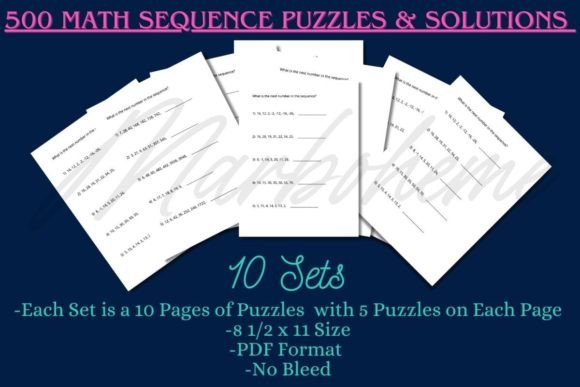
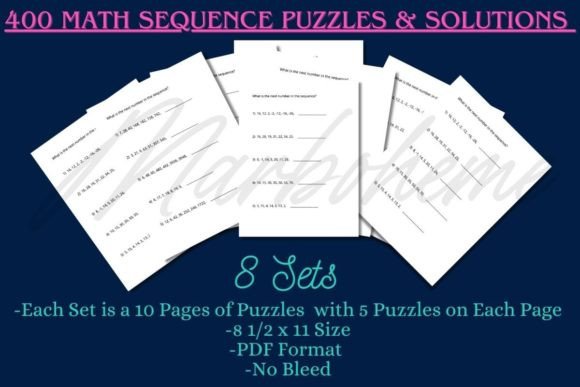
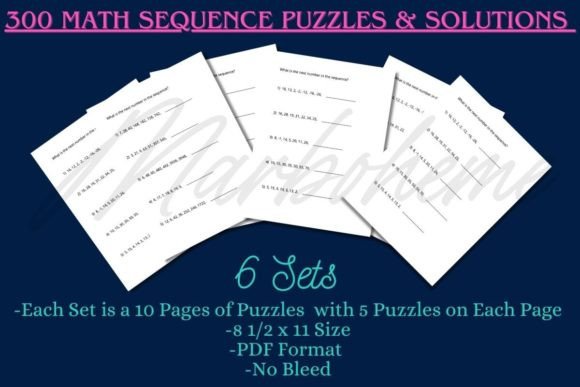
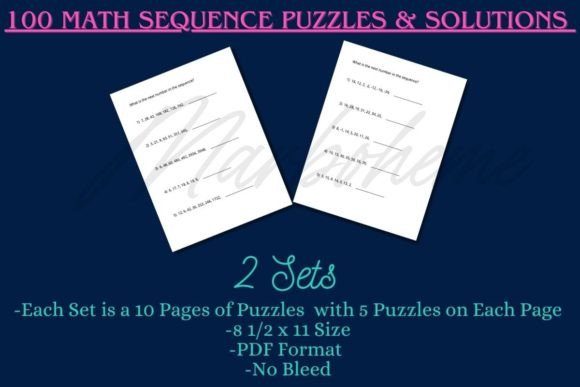
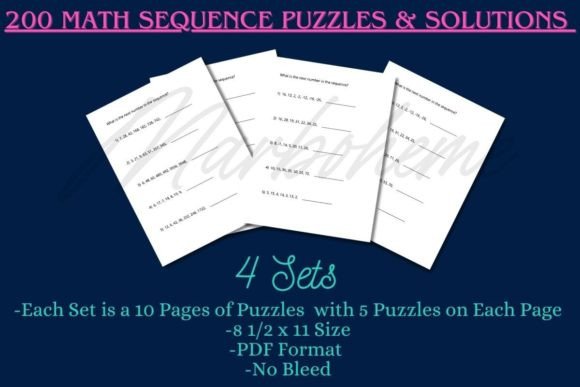
Spotting a hidden pattern—whether in nature, music, or a simple row of numbers—taps into something deeply satisfying. The moment a logical progression clicks into place, you get more than an answer; you experience a burst of mental clarity. That blend of curiosity and reward is exactly what draws people to sequence puzzles. The 200 Math Sequence Puzzles digital download delivers that experience in a structured, ready-to-use format, with 200 unique challenges spread across four distinct packets. Every packet includes 50 puzzles and its own set of solutions, all laid out on clean 8.5×11 pages with no bleed, so printing is straightforward and hassle‑free. While the puzzles are often described as being for adults and older children, they serve a much wider range of people—from classroom teachers and self‑publishing entrepreneurs to lifelong learners who simply enjoy keeping their brain active.
Why People Connect with Number Sequences
At their core, these puzzles ask you to look at a series of numbers and uncover the rule that produces them. The sequences can be built on addition, multiplication, alternating operators, or even a blend of multiple steps. That simplicity makes them accessible; the increasing complexity makes them addictive. For many, solving even a few puzzles a day acts as a low‑pressure mental workout. There are no timers, no competitive leaderboards—just you and the pattern. And because the digital file is yours to keep, you can revisit puzzles whenever you want, working through them at your own pace. That flexibility is one reason the collection appeals to such a broad audience. A puzzle you breeze through today might feel like a fresh challenge six months later, making the resource useful for years, not weeks.
Educators Who Want Low‑Prep, High‑Engagement Tools
Teachers often search for activities that require almost no setup but still provoke meaningful thinking. The 200 Math Sequence Puzzles fit that need perfectly. Because each page is designed to print on standard letter paper without any trimming, you can produce a classroom set in minutes. The solutions, included separately for each of the four packets, eliminate guesswork when checking student progress—whether you grade the puzzles yourself or let learners self‑assess. You don’t need a math degree to guide students through the logic; the puzzles build pattern recognition and analytical reasoning naturally, reinforcing skills that transfer to algebra, coding, and even scientific inquiry.
- Warm‑up exercises: Project a single sequence on the board or hand out a printed strip at the start of class to settle the room and spark curiosity.
- Learning stations: Place a packet of 10 puzzles at a table and let small groups collaborate, verbalizing how they test different rules.
- Remote or hybrid learning: Share the PDF, and students can solve on a tablet or print at home—no color ink required, since the puzzles use simple black‑and‑text layouts.
- Differentiation: Assign easier sequences from early packets to those building foundational skills, while advanced learners tackle the later, more layered puzzles.
An experienced math teacher might embed these puzzles into a unit on functions, using them to illustrate how input‑output rules create predictable patterns. A tutor coaching an older student for a high‑school equivalency exam could use them to strengthen number sense without the weight of a textbook. Even a homeschool parent with no formal math background can sit alongside a teenager and talk through the reasoning—turning puzzle time into a shared learning moment.
Publishers and Content Creators Looking for Ready‑to‑Print Interiors
If you publish puzzle books through Amazon KDP or similar platforms, you know how time‑consuming it is to generate original, error‑free content. The 200 Math Sequence Puzzles digital download was built with this audience in mind. The 8.5×11 no‑bleed format matches the most popular trim size for paperback puzzle books, so you can drop the pages directly into your manuscript. Because the puzzles are divided into four packets, you can easily structure a book with clear chapter breaks, progress levels, or even multiple volumes—without hiring a puzzle designer or spending weeks on creation.
The commercial opportunity goes beyond puzzle books. Bloggers and email marketers can repurpose a handful of puzzles as a free lead magnet, offering a mini‑packet in exchange for email subscriptions. Activity book creators can blend the sequences into larger brain‑training collections for seniors or teens. The key is that you receive a clean, uncluttered source file; you add your own branding, covers, and formatting flair. The value lies in the hours you save and the confidence that every puzzle comes with a verified solution, so you won’t face customer complaints about errors. For a freelance designer building a portfolio of low‑content books, this kind of ready‑to‑use asset can shorten the path from idea to published product dramatically.
How Puzzle Enthusiasts and Hobbyists Use the Collection
Not every user has a commercial goal. Many simply love the steady satisfaction of cracking a sequence. The 200 Math Sequence Puzzles become a daily ritual—perhaps with a cup of coffee in the morning or as a screen‑free activity before bed. Because the PDF is designed for digital consumption too, you can import it into a note‑taking app on a tablet and solve with a stylus, keeping everything paperless. The included solutions mean you never get stuck indefinitely; a quick peek reveals whether your rule was right and, if not, where your logic took a detour.
For adults who enjoy wordless logic, Sudoku, or cryptograms, number sequences offer a similar sense of order but with a shorter solve time. You can complete five or six puzzles in a lunch break and feel a genuine cognitive lift. Older adults might appreciate the puzzles as part of a brain‑training routine that’s portable and doesn’t require special equipment. And because the difficulty naturally varies—some sequences are straightforward, others require holding multiple operations in mind—the collection grows with you. You might start with Packet 1 and slowly work toward Packet 4, noticing how your instinct for patterns sharpens along the way.
Professionals Who Want to Strengthen Analytical Instincts
You might not expect a sequence puzzle to show up in a boardroom, but the underlying skill—pattern recognition—is central to many careers. Data analysts, developers, and financial planners all benefit from quickly spotting trends and anomalies. While the puzzles don’t teach specific job software, they exercise the same mental muscles. Spending ten minutes untangling a numeric rule can feel remarkably similar to debugging a script or reconciling an odd spreadsheet entry.
Freelancers and entrepreneurs who handle their own marketing often find that pattern‑based thinking helps with A/B test analysis or content planning. The puzzles become a mindful break that, instead of draining energy, resets focus. And because the digital file is yours permanently, you can pull it up whenever you need a low‑stakes challenge that doesn’t feel like procrastination. It’s a small investment in mental agility that pays off in sharper on‑the‑job thinking.
What to Evaluate When Choosing a Sequence Puzzle Resource
Not every puzzle collection is created equal, and different users have different priorities. Before deciding if the 200 Math Sequence Puzzles download matches your situation, consider what you actually need.
- Format and print readiness: If you plan to produce a physical book, look for no‑bleed interiors and a trim size that matches your chosen platform’s requirements. The 8.5×11 layout saves you from resizing and formatting headaches.
- Solution completeness: Some free puzzle sets skip solutions or provide them only for select puzzles. Here, all 200 puzzles have verified answer keys, which matters enormously for self‑assessment, grading, and publishing credibility.
- Volume and value: 200 puzzles means you’re unlikely to run out quickly. If you teach a full semester or want to publish a substantial book, a larger count adds real longevity.
- Usage rights: For KDP publishers and creators, the ability to use the puzzles inside a commercial product is non‑negotiable. This digital download is explicitly positioned for creating interiors, removing much of the legal guesswork that comes with generic clipart or crowd‑sourced puzzles.
- Learning curve: The puzzles don’t require advanced math; they’re accessible to older children and adults who remember basic arithmetic. That widens your audience, whether you’re teaching or selling.
Think about your own goal. If you’re a teacher, you might weigh the ease of printing against the curriculum alignment. If you’re a hobbyist, you might care most about answer quality and whether the puzzles stay interesting across all four packets. Matching the resource to your top priority—be that classroom flexibility, commercial usability, or personal enjoyment—helps you decide.
Putting the Puzzles into Daily Life
Imagine a typical week. On Monday, a high‑school math teacher prints the first ten puzzles from Packet 1 and slips them into a warm‑up folder. Students spend the first five minutes of class quietly testing rules. On Tuesday, a KDP publisher opens the PDF and copies Packet 2 into a formatted Word template, adding a title page and a “How to Solve” section. By Thursday, they have a proof ready for review. Meanwhile, a retiree enjoying a quiet afternoon on the patio pulls up the file on an iPad and works through three puzzles, checking the solutions only after completing all three. A freelance graphic designer, taking a break between client revisions, scribbles sequences onto a notepad and feels the mental recharge that comes from solving something unrelated to work.
The same set of puzzles serves each person, but the way they integrate into a routine is completely different. That adaptability is the silent strength of a well‑organized digital download. It doesn’t lock you into one use case; it opens up multiple paths, depending on your situation.
Making the Most of the Four‑Packet Structure
The division into four packets isn’t arbitrary—it gives you natural breakpoints. For a teacher, each packet could correspond to a grading period. For a publisher, each packet could become a separate volume in a series or a themed section in a larger book. Even if you use the puzzles solely for personal enjoyment, the structure lets you set achievable milestones: finish Packet 1 this month, move to Packet 2 next, and watch your speed and accuracy improve.
Because the puzzles rely on logical progressions rather than obscure facts, they stay fresh even when you return to an earlier packet after a break. You may remember the basic type of pattern but still need to work out the specifics—similar to rereading a favorite mystery. That balance of familiarity and challenge makes the collection useful over a long period.
Who Will Find the Most Value Here
If you’re someone who appreciates clear instructions, clutter‑free design, and the convenience of a print‑ready file that works as well on a screen as on paper, this kind of resource tends to fit. It doesn’t require an internet connection once downloaded, and there’s no subscription to manage. The puzzles themselves sit at an appealing midpoint: tough enough to engage an adult or a motivated teen but not so esoteric that you need a calculator or advanced training.
For creators who want to launch a product quickly, the commercial angle sets the collection apart from thousands of generic puzzle websites. For educators, it eliminates the guilt of using unlicensed materials or spending hours crafting their own sequences. For everyday puzzle lovers, it’s simply a generous supply of clean, solvable logic exercises that rarely feel repetitive. Whatever your starting point, the thread that connects all these uses is the quiet confidence that comes from recognizing a pattern before anyone points it out—a small but genuine mental victory, repeated 200 times.