500 Sequence Math Puzzles: A Resource for Sharp Minds
Patterns are the quiet language of logic. We hear them in music, see them in architecture, and rely on them in code, finance, and everyday problem solving. For anyone who has ever wanted to hone that instinct for structure and order, a thoughtfully designed puzzle set can make all the difference. The 500 Sequence Math Puzzles collection is exactly that: a digital download packed with numeric sequences that challenge you to look deeper, think ahead, and find the hidden rule. It's built for people who enjoy mental workouts, but also for creators and teachers who need flexible, ready-to-use material.
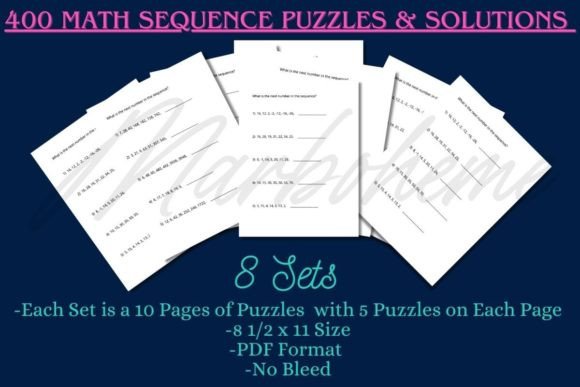
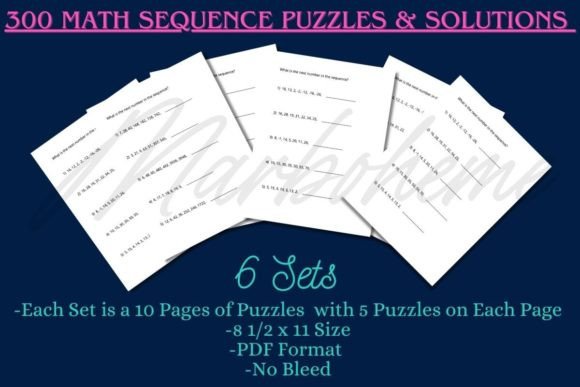
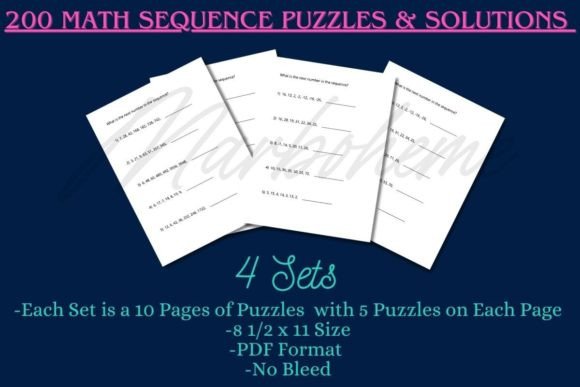
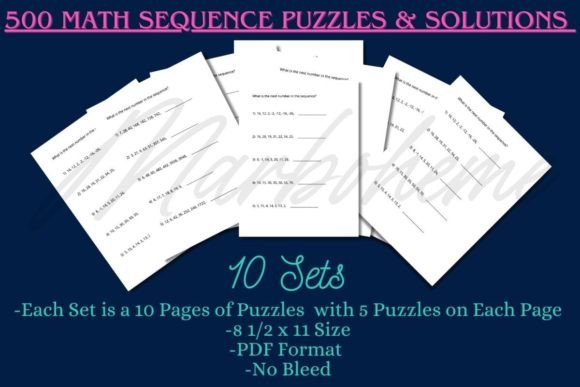
Each puzzle in this collection presents a string of numbers. Your job is to decipher the logic that connects them and predict what comes next. It sounds simple, yet within that simplicity is an incredibly effective way to train pattern recognition, a skill that spills into almost every profession and hobby. Because this isn't a single-use book but a set of 500 puzzles split into 10 manageable packets with included solutions, it adapts to many different needs and levels of commitment.
Who Gets the Most Out of Sequence Puzzles?
The audience for something like this is broader than you might expect. At first glance, it may seem like a resource for math teachers or quiz-night enthusiasts. But the truth is that the need to analyze, predict, and validate sequences shows up in software development, content creation, data analysis, and even in running a small online business. When you look at 500 Sequence Math Puzzles through these different lenses, its value shifts in surprising ways.
A teacher or tutor doesn’t just want a pile of numbers. They need material that fits into a lesson plan, offers varying difficulty, and saves them hours of creating their own exercises. They might look at this set and immediately appreciate that the puzzles come in 10 distinct packets with 50 puzzles each. That structure makes it easy to assign weekly challenges, differentiate instruction for older children and adults, or use them as warm-up activities. The included solutions also mean faster grading and the option to let students self-check their work, something that builds independent learning habits.
For an entrepreneur or KDP publisher, the viewpoint is entirely different. They’re asking: “Can I turn this into a product?” Because the files are formatted for 8.5×11 paper with no bleed and are sold as a digital download, a publisher can use the puzzles as interiors for activity books, logic journals, or daily brain-training volumes. The commercial usage aspect matters immensely here. The puzzles are already solved and arranged, which eliminates the biggest bottleneck in publishing: content creation. A creator who understands the low-content or medium-content book market knows that sequence puzzles for adults are an underserved niche with loyal buyers. This collection gives them the raw material to test ideas without starting from zero.
A remote worker, freelancer, or lifelong learner may have yet another motivation. They want a mental reset between tasks. Doing a row of sequence puzzles feels more productive than scrolling social media but still offers that satisfying micro-challenge. Because the download is digital, they can print a few sheets at home, keep a packet on their desk, or even use a tablet to work through patterns during short breaks. The portability and ease of access matter for people who don’t want to commit to a bulky book or a subscription app.
Different Ways to Approach the Puzzle Packets
Not everyone uses a puzzle collection the same way, and that’s part of its strength. Some users will begin with packet one and work methodically to packet ten, savoring the gradual increase in complexity. Others might dip in and out, picking puzzles at random to keep the challenge fresh. A parent might print just a few sheets for an older child who finishes math homework early and needs something extra, while a blogger could feature a “puzzle of the day” from the collection to build engagement on their site. The fact that each packet contains its own answer key makes any of these approaches equally valid—you never have to flip to the back of a huge book or search for a separate file.
When people first open the 500 Sequence Math Puzzles download, they’ll notice that the design is clean and straightforward. There are no distracting graphics or elaborate borders. This minimalism is intentional. It means the puzzles print clearly on any home or office printer, and they transfer well to greyscale interiors for commercial books. It also puts the focus squarely on the logic, not on decorative elements that might tire the eyes over dozens of puzzles.
On the topic of difficulty, these aren’t child-level counting exercises. The sequences are crafted to engage an adult or an older teenager. Some patterns rely on arithmetic progressions, others on alternating rules, squares, cubes, or mixed operations. A few might require stepping back and seeing a two-step logic that isn’t immediately obvious. This varied approach keeps the brain from coasting on autopilot. For a beginner, that might mean a gentle learning curve; for a seasoned puzzle lover, there’s still plenty of bite.
Why Number Sequences Still Matter in a Digital World
It’s a reasonable question: when we have calculators in our pockets, why spend time on numeric patterns? The answer is less about calculation and more about mental agility. Recognizing sequences builds the kind of thinking that helps you spot trends in a spreadsheet, debug an algorithm, or even detect narrative patterns in writing and marketing. Educators often call this “computational thinking,” but it’s really just a habit of looking for cause and effect. The more automatic that habit becomes, the faster you can solve real-world problems that aren’t laid out as neatly as a textbook exercise.
For a marketer or small business owner, this kind of training may feel abstract until you realize how often your work depends on noticing what changes and what stays the same. Sales data, customer behaviour, and campaign metrics all follow patterns. Sharpening your instinct for sequences off the clock can make you more intuitive about on-the-clock decisions. It’s not a magic bullet, but it’s a low-cost, low-pressure way to keep that part of your brain active.
Hobbyists and puzzle collectors see things from a more recreational angle. For them, the satisfaction lies in the moment a sequence clicks into place. It’s a small but reliable joy, and having 500 of those moments available in a single purchase feels like a generous supply. Since the puzzles never expire and can be printed multiple times, the value stretches over months or even years. One person might share copies with a family member, while another might use the entire set as a long-term personal challenge.
Practical Considerations When Choosing a Puzzle Resource
Not all digital puzzle products are created equal, and readers often wonder how to judge quality before they buy. Here are a few things that set a resource apart—and how this particular collection lines up for different users.
- Clarity and accuracy: Is the pattern genuinely solvable, or are there ambiguous answers? The included solutions remove guesswork, but more importantly, each puzzle was designed to have a single, verifiable logical path. For educators, that reliability is non-negotiable. For publishers, it prevents customer complaints down the line.
- Print readiness: A puzzle page that looks great on screen might waste ink or cut off at the edges when printed. The 8.5×11 no-bleed format is a quiet but critical feature. It means you can print at home, through a print-on-demand service, or at a local copy shop without worrying about scaling or clipping.
- Flexible usage rights: This is where the interests of different audiences diverge most clearly. A teacher needs a personal classroom license. A KDP creator needs commercial permissions to include puzzles in a book for sale. A buyer should always check the specific license terms that accompany a purchase, but a resource that explicitly supports both educational and commercial use (such as creating KDP interiors) opens doors that a single-use puzzle book cannot.
- Organization over volume: Having 500 puzzles is great, but only if they’re easy to navigate. The 10-packet structure with 50 puzzles each creates natural chunks. A user can finish one packet, feel a sense of completion, and move on fresh—a much better experience than staring down an endless list of 500 unsorted problems.
For the Creator: Turning Puzzles into Published Content
One of the most practical and immediate uses of this digital download is as interior content for a low-content or activity book on Amazon KDP or similar platforms. If you’ve ever tried to compile your own puzzle book, you know that generating and verifying 500 unique sequences is an enormous task. It can take weeks of focused work, and even then, errors creep in. Having a done-for-you, solution-verified set drastically compresses that timeline. A publisher can take a single packet and pair it with a custom cover to launch a mini-book, or use all 500 puzzles to create a comprehensive “Ultimate Sequence Puzzle Book for Adults.”
The market for adult brain-training and logic puzzles is steady and global. Customers in this category often look for puzzles that are challenging but not frustrating, and they appreciate clear layouts that don’t feel childish. Because the puzzles are designed for adults and older children, they naturally fit the tone buyers expect. A creator can also add their own instructions, a short introduction on the benefits of pattern exercises, or additional difficulty ratings to increase perceived value—all without touching the core puzzle content.
Integrating Sequence Puzzles into Learning Environments
Teachers and homeschooling parents often need supplementary materials that keep students engaged without adding to their prep workload. Math puzzles can serve as warm-ups, brain breaks, or even assessment tools. The fact that the 500 Sequence Math Puzzles are divided into packets means an educator can assign one packet per month, use select puzzles for group work, or even create a friendly classroom competition around who can solve the most sequences correctly in a set time.
Beyond the obvious math class setting, these puzzles work well in adult education and GED prep programs. Many adult learners benefit from activities that rebuild confidence in numerical reasoning without the pressure of formal tests. Since each puzzle is self-contained and the solutions are immediate, learners can work at their own pace and experience incremental success—a powerful motivator for those who may have had negative experiences with math in the past.
Is This Collection Right for You?
Deciding whether a digital puzzle set fits your life usually comes down to a few simple questions. Do you enjoy logical challenges, or do you need a resource for students, customers, or followers? Are you looking for something you can use repeatedly in different ways, rather than a single paperback you’ll finish and shelve? Do you value having control over how you print, share, or publish the material? If several of those answers are yes, then the flexibility of the download model becomes a genuine advantage.
For the casual user, the collection provides a huge volume of entertainment at what tends to be a lower cost than multiple physical books. For the professional or entrepreneur, it’s a time-saving asset that can be repurposed across projects. And for the teacher, it’s a reliable classroom tool that doesn’t require internet access, subscriptions, or annual renewals. Every user might emphasize a different reason, but underneath, they all benefit from the same core quality: 500 carefully constructed puzzles that quietly strengthen one of the most useful thinking skills a person can have.
In a world that constantly asks us to react faster, there is a quiet value in sitting down with a sequence and giving your mind the space to find its own rhythm. Whether that rhythm becomes a teaching aid, a published book, a daily habit, or just a well-deserved break, it starts the same way: with a row of numbers and the question, “What comes next?”