Letter and Number Tracing Book for Kids
When you first explore early childhood education resources, you quickly notice how many tracing workbooks feel generic. The Letter and Number Tracing Book for Kids offers something different: a polished, production‑ready set of printable pages that combines alphabet and number practice with professional design. It is not only a learning tool for toddlers and preschoolers but also a flexible asset for creators, publishers, and educators who need high‑quality content without starting from zero.
This particular bundle provides more than just worksheets. You get an editable, print‑optimized package that includes A‑Z letter tracing pages and 1‑20 number tracing sheets. The files come in multiple formats, which makes it practical for both personal use and commercial repurposing. Instead of wondering about margins, bleed, or resolution, everything arrives at 300 DPI and 8.5×11 inches — the standard print size for most home printers and KDP (Kindle Direct Publishing) paperbacks.
What Actually Comes in the Package
Many tracing book interiors sold online promise “print‑ready” files but deliver low‑resolution scans or a single PDF that is difficult to edit. This set is built for flexibility. The included PDF source file gives you a crisp master copy ready for instant printing. The EPS source file lets you open and modify every element in vector software like Adobe Illustrator. That means you can change fonts, adjust line weights, remove or add elements, and even convert pages into individual graphics for digital use.
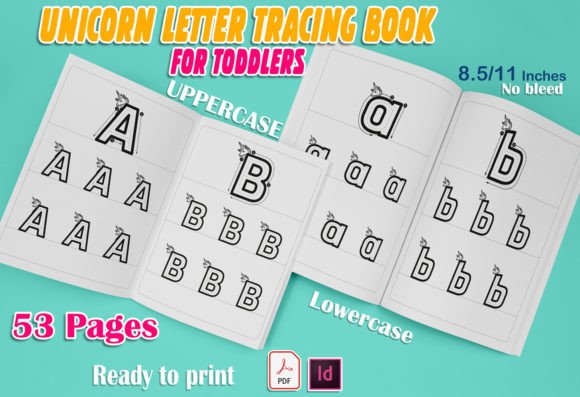
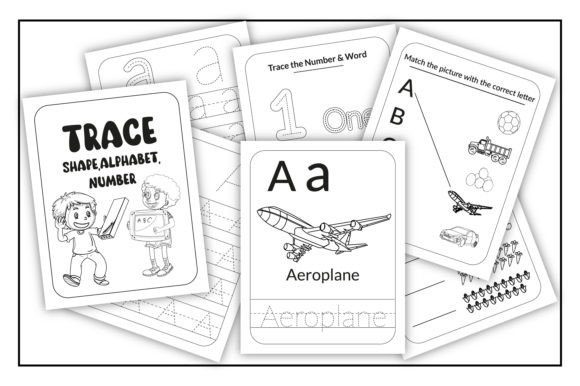
Across 119 pages, you get thorough coverage of upper and lowercase letters alongside digits from 1 to 20. Each tracing page is structured with ample repetition: a large example letter or number, guided directional arrows, and multiple rows of dashed outlines. The layout is clean, without distracting clip art or overly busy backgrounds. This visual simplicity helps young learners focus on pencil control and letter formation rather than filtering out noise. For someone creating content for children with attention difficulties or sensory sensitivities, that minimalist approach becomes a genuine advantage.
Why Page Count and Resolution Matter More Than You Think
At 119 pages, this is not a thin booklet. It’s substantial enough to be bound as a proper workbook or uploaded directly to Amazon KDP without needing to pad the interior. The 300 DPI resolution ensures that when you print at home, every dotted line remains sharp. If you have ever tried printing a low‑resolution tracing page, you know how fuzzy outlines can confuse a child who is still learning motor precision. Crisp lines reduce that friction. For commercial use, high resolution also prevents quality rejection from print‑on‑demand platforms.
Who Gets the Most Out of a Ready‑Made Tracing Book
The obvious users are parents and early childhood educators. A parent of a three‑year‑old can print a few pages at a time, slip them into a dry‑erase pocket, and let the child practice repeatedly without wasting paper. A preschool teacher can print the entire set once and use it as a morning warm‑up or a quiet‑time activity. Because the letter and number pages follow a consistent structure, children quickly internalize the sequence and become more independent.
However, the audience for the Letter and Number Tracing Book for Kids extends well beyond the classroom. Self‑publishing authors and KDP entrepreneurs have been using interiors like this to launch low‑content books quickly. Instead of designing 119 pages from scratch, a seller can download the package, brand the cover, possibly tweak the interior fonts in the EPS file, and publish a tracing workbook under their own imprint within hours. The time savings translate directly into a faster time‑to‑market, which matters in a competitive niche where trends shift with the school year.
Bloggers and online course creators find value here too. A parenting blogger can use the tracing pages as a free printable lead magnet to grow an email list. A language tutor teaching English to non‑native children might combine the letter pages with audio clips to create a simple digital learning pack. Anyone who produces educational content — on YouTube, Teachers Pay Teachers, Etsy, or their own membership site — can extract individual pages and incorporate them into broader activity books.
Design Details That Improve the User Experience
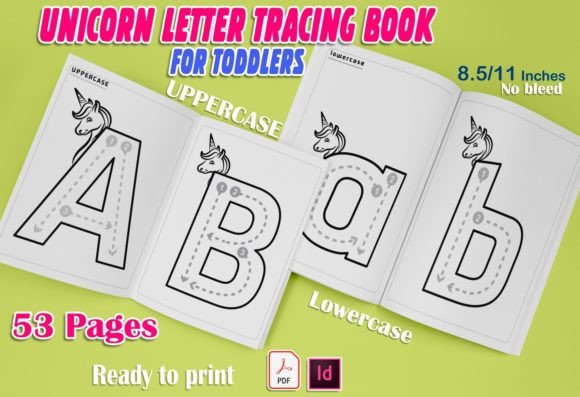
Walk through a sample alphabet page. You will typically see an uppercase “A” and lowercase “a” with numbered stroke directions, followed by several rows of tracing lines that fade slightly as the child progresses. This gradual release of guidance is a small touch that supports motor skill development without overwhelming the child. The same principle applies to numbers: a large “3” at the top shows the correct formation, and the tracing rows below allow for repeated practice.
The 8.5×11‑inch trim size matches standard printer paper, so there are no unexpected cropping issues. If you live in a region where A4 is the norm, you can easily scale the file when printing, but for the massive U.S.‑based market and the KDP paperback format, 8.5×11 is the safe choice. That simple dimensions decision removes one more headache for people who just want to print and use the material without opening a design tool.
Having the EPS source file is a standout feature. Unlike a flat PDF that locks everything down, the EPS file allows you to modify the entire interior in a vector editing program. You could swap the default font for a school‑approved handwriting style like D’Nealian or Zaner‑Bloser, add a child’s name placeholder, or adjust the line thickness for children with fine motor delays. For a speech therapist or occupational therapist customizing resources for specific clients, this level of control turns a general resource into a tailored intervention tool.
Practical Applications Beyond the Workbook Format
Once you treat the tracing pages as raw assets rather than a fixed book, the possibilities expand. Here are a few real‑world examples that show how different professionals can use the same core files:
- Digital learning apps: A developer can trace and convert the clean vector outlines into interactive assets for a tablet app. Because the source is vector, there’s no pixelation when scaling.
- Physical classroom centers: Print and laminate a selection of pages to create a handwriting station. Combine them with dry‑erase markers and a small eraser.
- Giftable activity kits: Pair ten letter tracing pages with a set of triangular crayons and a personalized folder for a thoughtful birthday present that encourages learning.
- Social media content: A parenting influencer can showcase a time‑lapse video of a child completing a tracing page, tagging the printable’s source, and driving traffic to a download link or profile.
- Adult education: Surprisingly, number tracing pages can help adults learning a new alphabet or numeracy system. The same clarity that aids a four‑year‑old benefits someone new to Western numerals.
All of these applications rely on the same foundation: a reliable, high‑resolution file set that does not degrade with repeated use. Because the download includes the source file, you are not limited to what the original designer envisioned. You can extract, repurpose, and remix the content while respecting commercial license terms.
Observations on Commercial Branding and KDP Publishing
For anyone selling on Amazon KDP, the interior matters as much as the cover. A poorly formatted interior with inconsistent line weights or missing pages leads to negative reviews. The Letter and Number Tracing Book for Kids arrives with consistent margins, no author credits on the pages (unless you choose to add them in the EPS file), and a flow that naturally moves from letters to numbers. This lets you upload the PDF directly to KDP’s print module and order a proof copy immediately.
From a branding perspective, you can insert your logo or website subtly into the front matter by editing the source file, but the tracing pages themselves remain free of promotion. That balance keeps the book looking professional while still allowing a quiet brand touch. If you plan to sell variants — a vehicle‑themed alphabet book, for example — you can layer themed illustrations onto the blank space in the EPS file without redrawing the tracing guides. This reuse of the same core structure across multiple products can significantly reduce your production time.
However, one smart move before publishing is to check current KDP interior requirements. Trim size, margin, and bleed expectations can shift. Having the EPS file means you can adjust page elements if Amazon updates its specifications, rather than being stuck with a locked PDF.
Selecting the Right Tracing Book Interior: What to Look For
If you are evaluating similar products, several markers indicate quality. First, always ask if a source file is included. A PDF alone is fine if you only want to print, but for customization, you need an editable format like EPS, AI, or even a high‑resolution PSD. Second, verify the resolution. 300 DPI is the baseline for print; anything below that risks a blurry result. Third, look at sample pages. The progression of tracing should make sense — perhaps starting with larger guidelines and slightly shrinking as the pages advance, or at least maintaining consistency. The Letter and Number Tracing Book for Kids keeps a uniform size, which works well for younger children who benefit from predictable repetition.
Another practical consideration is page count relative to price. At 119 pages, this offering covers the core curriculum for early handwriting. Some cheaper bundles include only a handful of pages, forcing you to duplicate content to make a viable book. Here, the volume is already built in, so you avoid the filler trap.
Bringing It Into Daily Life Without Overwhelm
A tracing book only works if it’s used. For parents, integrating the pages into a simple routine — like one page after breakfast — builds consistency without turning learning into a chore. Because the pages are uncluttered, a child can finish a sheet in three to five minutes, which fits most attention spans. For educators, storing the printable PDF on a tablet or in a cloud folder means you can pull a fresh copy whenever a child needs extra practice, without digging through a filing cabinet.
Print settings matter too. Use “Actual Size” rather than “Fit to Page” to keep the 8.5×11 proportions. If you are printing from the PDF, choose high‑quality print settings on your printer dialog to preserve the thin tracing lines. For repeated use, 32‑lb paper or light cardstock holds up better under enthusiastic pencil pressure.
Ultimately, this type of resource succeeds because it bridges a gap between amateur homemade worksheets and overly expensive commercial options. The editable source file puts control in your hands, whether you are a parent who wants to add a child’s name to every page or a publisher seeking to launch a new workbook series. Rather than being locked into a single use, you gain a versatile foundation that adapts to your specific context. That adaptability keeps the Letter and Number Tracing Book for Kids relevant long after a typical activity book would have been discarded.