Streamlining Your Tax Preparation Workflow with a Tax Checklist Journal KDP Interior
Every year, the approach of tax season brings a familiar mix of urgency and anxiety for individuals, freelancers, and small business owners alike. The challenge isn’t just about crunching numbers—it’s about staying organized, meeting deadlines, and ensuring no critical document or deduction gets overlooked. A well-designed organizational tool can transform this chaotic period into a structured, manageable process. The Tax Checklist Journal KDP Interior addresses this need directly by offering a printable, customizable framework that helps you track every tax-related task, note, and upcoming due date.
Why Traditional Tax Tracking Methods Often Fall Short
Many people rely on scattered sticky notes, generic notebooks, or digital spreadsheets that lack a dedicated tax-focused structure. These approaches introduce several inefficiencies:
- Fragmented information: Receipts, deduction checklists, and IRS correspondence end up stored in different places, making retrieval time-consuming.
- Missed deadlines: Without a centralized timeline, estimated tax payments or filing extension dates slip through the cracks.
- Inconsistent documentation: Freelancers and small business owners often forget to log deductible expenses like mileage or home office costs until it’s too late.
- Limited customization: Pre-printed tax planners may not fit every unique situation, leaving gaps in the tracking process.
The Tax Checklist Journal KDP Interior reimagines tax organization by placing priority on clarity, repetition, and adaptability. By integrating a checklist-driven format alongside wide open spaces for notes, it turns a potentially overwhelming burden into a series of simple, actionable steps.
Breaking Down the Core Layout of the Tax Checklist Journal
The interior design of a tax checklist journal is meticulously structured but flexible enough to serve diverse financial scenarios. Typical sections found within a well-crafted version include:
- Annual Tax Calendar: A visual mapping of all major filing dates, estimated tax installment deadlines, and extension cutoff dates.
- Income Tracking Pages: Detailed tables to log sources of revenue, 1099 forms received, and freelance earnings over multiple months.
- Deduction and Credit Checklists: Categorized lists covering medical expenses, charitable contributions, educational credits, business vehicle use, and more.
- Document Collection Logs: A running inventory of W-2s, mortgage statements, investment reports, and other essential paperwork, with columns to mark receipt and filing status.
- Tax Preparer Communication Notes: Space to record questions for your accountant, notes from meetings, and follow-up actions.
- Year-Over-Year Comparisons: Summary areas that let you note changes in income, deductions, or life events that could impact your tax bracket.
Because the interior is delivered in an editable format—such as the included AI and EPS source files—creators and individuals alike can rearrange or tweak these sections to better match their personal workflow before printing.
Design Characteristics That Make It Suitable for Print and Digital Use
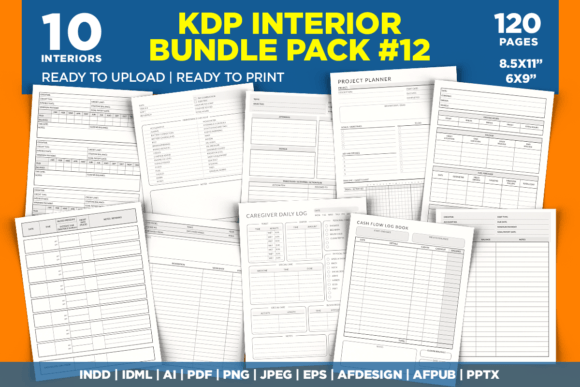
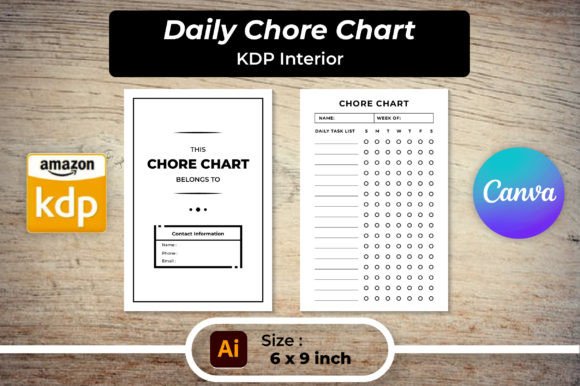
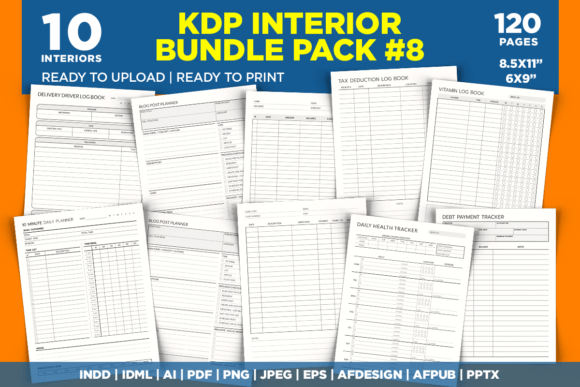
The term KDP Interior signals that this product was originally crafted for Kindle Direct Publishing, but its utility extends far beyond that. All files arrive at 300 DPI with print-ready specifications, meaning they produce crisp, professional results whether you take them to a local print shop or print at home. The 6 x 9 inch dimension, a staple in the notebook world, keeps the journal portable yet roomy enough for detailed entries. Crucially, the package includes both 100, 110, and 120-page PDF variants, so you can pick the thickness that aligns with your record-keeping depth—whether you're an individual filer with simple returns or someone managing complex business finances.
Beyond the PDFs, the availability of editable vector formats (AI, EPS, SVG) opens up a world of personalization. You can change fonts, adjust line spacing, add custom branding if you’re a tax professional creating client workbooks, or introduce color coding before printing. The PNG and JPG files offer additional flexibility for those who want to import pages into digital note-taking apps like GoodNotes or Notability, effectively merging analog structure with digital convenience.
Practical Use Cases Across Different Filing Profiles
The versatility of the Tax Checklist Journal KDP Interior means its value isn’t limited to a single demographic. Here’s how various users can integrate it into their routines:
Freelancers and Gig Economy Workers
For independent contractors, tracking quarterly income and uncovering all possible business expenses is paramount. The journal can host monthly income logs alongside a persistent checklist of often-forgotten deductions: home office square footage, software subscriptions, phone bills, and health insurance premiums. Since freelancers often handle their own taxes without a dedicated finance department, the checklist format acts as a built-in accountability system.
Small Business Owners
Entrepreneurs juggle payroll reports, inventory costs, depreciation schedules, and more. A journal with 120 pages gives you ample room to segment different tax categories and maintain a rolling record throughout the fiscal year, not just during filing season. Pairing the printable interior with a spiral binding creates a durable, ongoing reference that can be shared with a bookkeeper or CPA.
Tax Professionals and Coaches
Accountants and tax coaches can rebrand the interior to produce a supplementary workbook for their clients. Instead of handing out generic folders, they can provide a cohesive guide that standardizes how clients compile information—reducing back-and-forth emails and speeding up the preparation process. Since the source files are editable, contact details and firm logos can be incorporated seamlessly.
Educators and Financial Literacy Advocates
When teaching personal finance or small business management, instructors often need a practical resource that translates theory into habit. The journal can be assigned as a project where students track mock income, locate potential deductions, and simulate filing preparation. The tangible checklist element builds confidence before they face real-world tax obligations.
How the Checklist Methodology Enhances Accuracy and Reduces Stress
A Tax Checklist Journal derives much of its power from the checklist format itself. In high-stakes environments like aviation and medicine, checklists reduce errors by ensuring consistent execution of complex procedures. Applying the same principle to tax preparation minimizes cognitive overload. When you can physically tick off “Review 1099-NEC forms,” “Verify dependent Social Security numbers,” or “Check IRA contribution eligibility,” your brain can focus on thoroughness rather than trying to remember what step comes next—a process called error-proofing. Over time, the journal becomes a historical artifact that shows exactly what was gathered and considered, which can be useful in an audit or when planning for future tax years.
Customization Possibilities Within the KDP Framework
One of the less obvious but significant advantages of a KDP-ready interior is its adaptability for commercial creators. If you design low-content books to sell on Amazon, you can use the editable source files to build your own branded version of a tax planner. The Tax Checklist Journal layout saves considerable design time while still allowing you to add unique cover designs, modify page counts, or insert motivational quotes and tips. Because the base files support resizing, you could also reformat the interior for A5 or US Letter preferences, catering to different customer segments.
For those who purchase the product for personal use only, the ability to open an AI file and simply change the year on all headers ensures the journal remains a perennial tool—not something that becomes obsolete in twelve months. A quick edit and a reprint set you up for the coming year without starting from scratch.
Integrating the Journal into a Year-Round Tax Strategy
Tax organization often fails because it’s treated as a seasonal sprint rather than an ongoing habit. A structured journal encourages a shift toward continuous documentation. You might set a monthly reminder to:
- Update income totals.
- Log any business mileage.
- File receipts into categorized envelopes labeled according to the journal’s checklist sections.
- Check upcoming estimated tax payment dates.
By the time January arrives, the bulk of the compilation work is already done. You can then use the journal to perform a final review against the previous year’s return, highlight any new assets or life changes, and prepare a summary for your tax preparer. This year-round approach demystifies the process and often reveals deductible expenses that might have been overlooked in a last-minute scramble.
What to Look for When Choosing a Printable Tax Journal
Not all tax planners are created equal. When evaluating a Tax Checklist Journal KDP Interior or similar product, consider these factors:
- Inclusivity of file formats: A robust set including AI, EPS, SVG, PNG, and multiple PDF page counts indicates you won’t be locked into a single usage scenario.
- Logical flow of sections: The checklist should progress naturally from gathering documents to income tallying, then deductions, and finally review.
- White space and note areas: Checklists alone can feel restrictive. Ample room for handwritten observations about unusual situations or follow-up research adds immense practical value.
- Print specifications: 300 DPI and a standard trim size like 6x9 inches ensure professional output without strange margins or blurry text.
The combination of editable source files and ready-to-print PDFs found in this product line provides a bridge between DIY customization and immediate utility—a key reason it resonates with both individual users and professional designers looking for a solid content foundation.
Bridging the Gap Between Digital and Analog Record-Keeping
An interesting contemporary use case is the hybrid system. You might maintain your primary financial records in accounting software like QuickBooks or Wave, but still print and fill out the journal as a physical backup and planning tool. Tangible checklists offer a focus that screens often fracture. The physical act of checking a box can create a sense of completion that reduces tax anxiety. Conversely, if you prefer a paperless workflow, the PNG and JPG files can be imported into a tablet app, where you use a stylus to mark progress. Thus, the Tax Checklist Journal KDP Interior supports the full spectrum from fully analog to fully digital with an analog aesthetic.
Maintaining an On-Brand Professional Image for Tax Professionals
For accountants and tax advisors, distributing a generic tax booklet can dilute a brand experience. The editable AI file solves this by allowing full brand integration. You can adjust the color palette to match firm colors, insert a logo on every page, replace standard headers with personalized categories, and even add disclaimers or referral prompts. This turns a simple checklist into a client retention tool—each time a client interacts with the journal, they’re reminded of your professional relationship and organized approach.
Sustainable Record-Keeping and Legacy Planning
Beyond immediate tax filing, a completed journal becomes a concise summary of a financial year. In cases of estate planning or passing financial tasks to a family member, these records offer a clear trail of what was reported, which assets were declared, and the overall tax strategy in place. While not a substitute for official returns, the journal complements them by capturing the decision process behind specific deductions or filing positions. Keeping a few years’ worth of these journals on a shelf creates a personal financial time capsule that can reveal patterns in income, charitable giving, or business growth.
The Tax Checklist Journal KDP Interior ultimately serves as a blueprint for confidence. Its structure, combined with the flexibility of editable and printable formats, makes it equally useful as a personal assistant during tax season, a backbone for client workbooks, or a customizable template for publishing. By embedding tax preparation into a consistent, checklist-driven habit, you replace uncertainty with clarity and ensure that every deductible dollar is captured. As tax laws evolve and personal circumstances shift, having a dedicated space to document, review, and reflect transforms a once-dreaded obligation into a manageable—even empowering—annual routine.